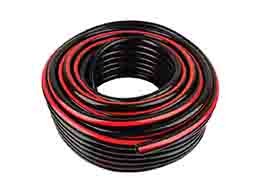
This air hose buying guide explores essential pneumatic hose materials (Poly, Rubber,Hybrid, PVC), diameters, and...
The Essential Guide to Composite Hose Manufacturers.
Hose Introduction: Why Your Choice of Composite Hose Manufacturer Matters
Every day, millions of gallons of hazardous materials flow through industrial pipelines, maritime transfer systems, and refueling facilities worldwide. Behind the seamless operation of these critical infrastructure systems stands a decision that facility managers, procurement specialists, and safety directors rarely discuss in public, yet consider constantly in private: the selection of a reliable composite hose manufacturer.
This choice is not made lightly. When a petroleum company transfers volatile cargo at sea, when an aviation facility refuels aircraft during tight operational windows, or when a chemical processor distributes specialty compounds worth thousands per liter, every connection in the transfer system carries immense responsibility. A failure at any point can trigger catastrophic consequences—environmental disasters, workplace injuries, regulatory penalties, and substantial financial losses.
The composite hose industry has transformed dramatically over the past two decades. What once seemed like an experimental alternative to traditional rubber and metal hoses has evolved into an essential, highly specialized sector where cutting-edge engineering meets rigorous safety protocols. Today's leading composite hose manufacturers have become trusted partners in industries where failure is simply not an option.
Yet many organizations still struggle with a fundamental question: What should we actually prioritize when selecting a composite hose manufacturer? The answer is more complex than most people realize—and it's precisely this complexity that separates industry leaders from ordinary suppliers.
Beyond Specifications: The Safety Imperative and True Customer Requirements for Composite Hoses
Why Safety Isn't Just Compliance—It's Your Foundation
Walk into any procurement department at a major oil company, chemical manufacturer, or shipping operation, and you'll hear the same refrain: safety is non-negotiable. But this statement, while accurate, masks a deeper truth that professional composite hose manufacturers have learned through years of experience and, sometimes, through painful failures.
Safety in composite hose applications means something far more sophisticated than meeting minimum regulatory standards. It means understanding that a composite hose pipe is not merely a conduit—it is a critical component in a complex system where small failures can cascade into major incidents. This understanding fundamentally shapes how leading composite hose manufacturers approach their entire business operation.
When customers evaluate composite hose manufacturers, they are ultimately asking one core question: Can I trust this manufacturer to anticipate problems I haven't even considered yet? This question reflects an intuitive recognition that hazardous material transfer involves countless variables and edge cases that no standard can completely specify.
Chemical Compatibility: The Foundation of Everything
The journey toward selecting the right composite hose manufacturer begins with a seemingly straightforward question: Will this hose safely transport my specific chemical? In practice, answering this question with confidence requires knowledge that extends far beyond simple material matching.
A professional composite hose supplier maintains comprehensive compatibility databases covering hundreds of chemicals, fuels, solvents, gases, and specialized fluids. But more importantly, they understand the nuances that separate theoretical compatibility from real-world reliability. They recognize that identical chemicals from different suppliers may exhibit different reactivity profiles. They account for temperature variations that alter chemical behavior. They understand how pressure cycling accelerates certain degradation mechanisms while mitigating others.
Consider a practical example: a composite fuel hose designed for aviation jet fuel must perform flawlessly with Jet A-1, the industry standard. But advanced composite hose manufacturers recognize that subtle variations in fuel composition—influenced by geographical location, refining process, and seasonal adjustments—can affect hose performance. They conduct extensive testing not just with theoretical fuel specifications, but with actual samples from real-world supply chains.
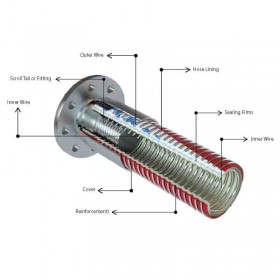
Leading composite hose manufacturers employ materials scientists and chemical engineers who have spent careers understanding how various polymers and elastomers respond to chemical exposure. The internal layer materials of a composite hose pipe—whether polypropylene, polyethylene terephthalate, PTFE, or specialized thermoplastic compounds—are selected through rigorous testing protocols. Each material is evaluated not just for initial compatibility, but for how it responds to repeated cycling, temperature fluctuations, and extended exposure.
This commitment to chemical compatibility extends to the flexible composite hose's multi-layer construction. Every layer—from the internal fluid-contact surface to the external protective cover—must maintain its performance characteristics while exposed to the transported medium. A chemical composite hose that performs beautifully in laboratory conditions but fails in the field represents a catastrophic failure of the manufacturer's core responsibility.
The Permeation Challenge: Protecting What Matters Most
One of the most sophisticated engineering challenges that composite hose manufacturers face involves preventing the uncontrolled migration of gases and volatile liquids through the hose wall—a phenomenon known as permeation. For customers, permeation performance is not an abstract technical concern; it directly impacts profitability, environmental compliance, and operational safety.
Consider the losses associated with fuel permeation in large-scale operations. When a composite oil hose or composite fuel hose slowly releases vapors into the surrounding environment, the economic impact accumulates steadily. A large refueling facility with multiple hose connections can lose thousands of gallons annually through permeation. But the financial impact pales in comparison to the environmental and health consequences. Volatile organic compounds released through inadequate permeation barriers contribute to air pollution, environmental damage, and worker exposure to harmful substances.
Professional composite hose manufacturers have invested heavily in barrier layer technology specifically to address this challenge. The barrier layer—typically positioned in the middle of the composite hose pipe's multi-layer structure—serves as the permeation prevention system. Advanced composite hose suppliers utilize specialized fluoropolymer barriers, multi-directional composite constructions, and proprietary material formulations that achieve permeation performance meeting or exceeding international standards like EN 13765.
The composite cargo hose exemplifies this engineering sophistication. Maritime cargo operations involve transferring valuable mineral oils, refined petroleum products, and specialty chemicals in high-volume quantities. A cargo hose that allows even minimal vapor loss represents a direct reduction in cargo quality and customer payment. Moreover, regulatory agencies have established strict environmental limits on volatile organic compound emissions from maritime transfer operations. Composite hose manufacturers working with major shipping companies have engineered cargo hoses that virtually eliminate permeation losses while maintaining the flexibility and durability required for reliable maritime operations.
Electrical Continuity: The Safety Feature Nobody Sees Until It Fails
Among the most critical yet frequently overlooked safety features in composite hose design is comprehensive electrical continuity. This refers to the presence of a complete, uninterrupted conductive pathway from one end of the composite hose to the other, maintained through integrated metal conductors, conductive reinforcement fibers, and metallurgically bonded couplings.
Why does this technical detail matter so profoundly? The answer lies in the fundamental physics of static electricity. When flammable liquids or their vapors flow through a transfer system, static electrical charge accumulates in the fluid and surrounding materials. If this charge cannot dissipate safely to ground through a conductive pathway, it builds up until it suddenly releases as a spark. In an environment saturated with flammable vapors, a single spark can trigger an explosion.
This scenario is not theoretical speculation or worst-case disaster planning. It represents a genuine hazard that has caused industrial accidents, loss of life, and environmental catastrophes. This is precisely why every professional composite hose manufacturer incorporates multiple conductive elements throughout the composite hose pipe structure. These conductive wires or layers are bonded into the reinforcement matrix during manufacturing, creating redundant pathways for electrical discharge.
Advanced composite hose manufacturers go far beyond minimum regulatory requirements in addressing electrical continuity. They design composite flexible hose products with multiple independent conductive pathways, ensuring that even if one conductor experiences damage from abrasion, impact, or flexing, alternative electrical paths remain fully functional. End fittings are selected, processed, and installed to ensure that metallurgical bonds at coupling points maintain absolute continuity. Testing protocols verify that electrical resistance values consistently fall within specified limits, confirming that the conductive pathways function reliably under all operational conditions.
The composite fuel hose deployed in aviation refueling operations exemplifies the rigorous electrical continuity requirements that leading manufacturers maintain. Aviation facilities operate under some of the most stringent safety regulations in any industry. Refueling operations occur in tight timeframes with significant operational pressure. Yet safety cannot be compromised—even momentarily. Professional composite hose manufacturers serving the aviation industry have made electrical continuity so reliable that it has become invisible to operators, who simply expect hoses to perform safely without ever considering the sophisticated engineering behind static dissipation.
Performance Excellence: Engineering for Operational Success
Flexibility: The Operational Advantage That Compounds Over Time
The transition from heavy rubber hoses and rigid metal conduits to modern composite flexible hose systems represents one of the most significant productivity improvements in industrial fluid transfer operations over the past two decades. This transformation did not occur by accident or regulatory mandate; it emerged from the practical recognition that operational efficiency, worker safety, and total cost of ownership are inextricably linked.
Flexibility in a composite hose pipe translates directly into operational advantages that accumulate throughout the product's service life. A flexible composite hose that can be easily routed through confined spaces, bent around obstacles, and maneuvered during connection and disconnection operations reduces installation complexity and time. Workers who can efficiently handle a composite flexible hose experience less physical strain, maintain better focus on critical safety procedures, and complete operations more quickly.
The maritime industry provides a compelling example of how flexibility drives operational success. When transferring cargo between ships at sea or between ship and shore-based terminals, operational crews must deploy large-diameter hoses rapidly, connect them securely, manage them safely during extended transfer operations that may last hours, and then recover them efficiently. A traditional rigid hose system would require substantial deck space, heavy-duty infrastructure, and specialized equipment operated by trained personnel. A modern composite cargo hose, by contrast, can be deployed, managed, and recovered by relatively small crews working efficiently even in challenging maritime conditions.
This operational flexibility stems from careful materials engineering choices made by leading composite hose manufacturers. The selection of reinforcement materials, the precise design of reinforcement geometry, and the development of elastomeric and thermoplastic formulations that maintain their properties across broad temperature ranges all contribute to the superior flexibility of premium composite hose products. A high-quality composite hose pipe that remains flexible in Arctic conditions while maintaining dimensional stability and chemical barrier performance in tropical heat represents years of materials science innovation and rigorous testing.
Pressure and Temperature: Precision Engineering Across Multiple Dimensions
The operating envelope within which a composite hose must perform safely encompasses multiple simultaneous requirements: maximum working pressure, temperature range, cyclic stress tolerance, environmental exposure resistance, and chemical compatibility. Designing a product that excels across all these dimensions simultaneously represents one of the most challenging engineering problems in the fluid transfer industry.
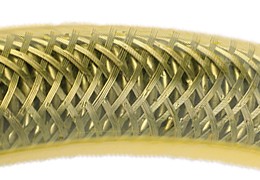
Pressure performance begins with the reinforcement structure—the layers of synthetic fibers (typically polyester, aramid, or HDPE) that are wound or braided around the internal layer of the composite hose pipe. These reinforcement layers carry all the pressure load during operation, converting hoop stress into tensile force that the fibers must resist without elongating excessively or failing catastrophically. Advanced composite hose manufacturers employ sophisticated finite element analysis, materials testing, and numerical simulations to optimize reinforcement geometry and fiber selection. This optimization enables the design of hoses that achieve required pressure ratings safely while minimizing over-design and unnecessary weight.
Temperature performance requirements often prove more demanding than pressure specifications, because temperature affects virtually every component simultaneously. The internal layer material must maintain its chemical resistance across the full temperature range, from sub-zero Arctic conditions to tropical heat. Elastomeric or thermoplastic binders must retain their mechanical properties—flexibility, strength, and tear resistance—at temperature extremes. The barrier layer must not become brittle and prone to cracking at low temperatures, nor should it become excessively permeable at elevated temperatures. External protective covers must resist thermal degradation, ultraviolet radiation damage, and ozone attack across the complete temperature range.
The composite fuel hose deployed in aviation refueling operations exemplifies these simultaneous temperature demands. Modern commercial aviation operates globally, with refueling occurring from high-altitude airports in the Himalayas where ambient temperatures plunge well below freezing, to desert locations where ground temperatures exceed 50°C. Aircraft arrive at gates with fuel systems at one temperature, then receive rapidly transferred fuel at another temperature, creating thermal cycling stress. During rapid fuel transfer operations, friction and pressure drop can raise hose internal temperatures significantly. The composite fuel hose must maintain absolute chemical compatibility with the fuel, prevent any permeation of fuel vapors into the environment, provide complete electrical continuity for static dissipation, and perform reliably through thousands of thermal cycles—all simultaneously. This constellation of simultaneous requirements demands that composite hose manufacturers employ premium materials throughout and implement manufacturing processes of exceptional precision.
Industrial applications present equally demanding but different temperature challenges. The composite oil hose used in industrial thermal transfer systems may circulate heat transfer fluids maintained at 300°C or higher, accelerating many degradation mechanisms that occur slowly at moderate temperatures. The hose must maintain structural integrity and chemical barrier performance at these elevated temperatures while also functioning properly when circulation systems shut down and temperatures gradually decline. This thermal cycling, repeated thousands of times across the hose's operational life, demands materials and construction techniques refined through extensive real-world testing and continuous refinement.
Durability and Longevity: The Long-Term Value Proposition
Durability—the ability of a composite hose to maintain safe, reliable performance across its entire service life without degradation or unexpected failures—encompasses multiple interconnected performance dimensions: abrasion resistance, flex-life performance, kink resistance, UV resistance, ozone resistance, and environmental durability. Achieving excellence across all these dimensions simultaneously represents the hallmark that distinguishes professional composite hose manufacturers from those who simply meet minimum standards.
Abrasion resistance addresses a practical reality of industrial operations: hoses experience mechanical contact with rough surfaces, sharp edges, and abrasive materials. The external protective cover of a composite flexible hose must be formulated with reinforced elastomers or thermoplastics that can withstand this mechanical abuse without cracking or tearing, while remaining flexible enough to allow the hose to bend and flex without experiencing surface degradation. Advanced composite hose manufacturers formulate cover compounds with specific elastomer chemistries, reinforcement structures, and additives optimized for abrasion resistance in specific application environments.
Flex-life performance—the ability of a composite hose to maintain complete structural and functional integrity through thousands or millions of flexing cycles—represents another critical durability dimension. In applications where hoses are regularly connected and disconnected, or where operational conditions cause repeated bending and straightening, inferior hose construction fails progressively. The internal layers crack, the barrier layer degrades, and eventually permeation increases or fluid begins leaking around connection points. Professional composite hose manufacturers test their products through accelerated flex-life testing protocols, subjecting them to millions of cycles under controlled laboratory conditions that simulate extended service life. These tests verify that flex performance exceeds customer requirements across the full temperature and pressure range.
Kink resistance ensures that the composite hose pipe maintains its internal diameter and fluid flow path integrity even when bent sharply during handling or installation. A hose that collapses internally can restrict flow, accelerate degradation of the internal layer through altered flow patterns, and reduce operational efficiency. Sophisticated composite hose manufacturers engineer their reinforcement structures to maintain open internal passages even under extreme bending conditions, ensuring that operational performance remains consistent even when hoses are stored compactly or routed through tight spaces.
Environmental durability—resistance to UV radiation, ozone, weathering, and thermal cycling—determines how long a composite hose can maintain reliable service when exposed to outdoor conditions. Industrial facilities, maritime installations, aviation terminals, and outdoor equipment all expose hoses to these environmental stressors. Composite hose manufacturers working with customers in these demanding environments formulate external covers with UV absorbers, antioxidants, and ozone-resistant elastomers specifically selected to significantly extend service life. A hose that maintains its external cover integrity and flexibility after years of outdoor exposure represents a far superior long-term investment compared to alternatives that degrade rapidly under environmental stress.
The Professional Edge: How Compliance, Customization, and Service Distinguish a Composite Hose Supplier
Meeting International Standards and Regulatory Requirements
Professional composite hose manufacturers understand that regulatory compliance is the absolute baseline—the minimum requirement for operating in any market. However, true market leaders recognize that customer confidence extends far beyond regulatory compliance to encompass the consistency and rigor of quality systems, testing protocols, and continuous improvement processes.
Leading composite hose manufacturers maintain certifications against EN 13765 (the primary European standard for composite hoses), EN 13766 (for cargo hoses specifically), and various national and international standards specific to different application sectors and geographic markets. But more importantly, they have established quality management systems that exceed standard requirements, implementing statistical process controls, comprehensive traceability systems, and regular auditing procedures that enable rapid identification and resolution of any quality issues.
Professional composite hose suppliers recognize that customers require not just initial certifications, but ongoing proof that manufacturing processes remain under control and product quality remains consistent across all production runs. They maintain detailed documentation of material source verification, process parameters, test results, and customer feedback. This documentation creates a complete quality history that customers can audit and verify independently.
Customization Capabilities: Engineering Solutions for Unique Requirements
While standard composite hose pipes meet the needs of many applications, leading composite hose manufacturers recognize that many of their most important customers operate in specialized environments with unique requirements that demand customized solutions. The ability to provide tailored products while maintaining unwavering quality standards separates true professional manufacturers from commodity suppliers.
Customization extends across multiple dimensions. Customers may require specific internal layer materials to handle unusual chemicals or extreme temperatures. They may need specialized barrier layers to achieve permeation performance beyond standard specifications. They may require reinforcement modifications to achieve pressure ratings that exceed conventional designs, or conversely, they may accept lower pressure ratings in exchange for superior flexibility. They may need custom length hose assemblies pre-assembled with specific coupling types and configurations. They may require specialized markings, color coding, or documentation requirements driven by their internal procedures or customer specifications.
Professional composite hose manufacturers have established engineering processes that enable rapid assessment of customization requests, evaluation of feasibility, determination of qualification requirements, and efficient execution of custom manufacturing. This capability allows customers to access tailored solutions without the long lead times and substantial costs that would accompany full product development for niche applications.
Technical Support and Partnership: The Service Dimension That Drives Real Value
The most significant differentiator between professional composite hose manufacturers and ordinary suppliers often goes unnoticed by customers until they actually need it—comprehensive technical support and true partnership in achieving customer success.
This support begins at the initial selection phase. A professional composite hose supplier works collaboratively with the customer to fully understand their specific application: the chemical or fluid being transported, the pressure and temperature requirements, the environmental conditions, the installation constraints, and the operational procedures. Through this detailed analysis, the manufacturer provides specific product recommendations, explains why certain options are preferred over alternatives, and identifies potential challenges before they become problems.
Professional technical support continues through installation guidance. Different applications require different installation approaches. A composite cargo hose used in maritime operations requires different handling, storage, and connection procedures compared to a composite fuel hose in an aviation facility. Composite hose manufacturers working at the highest professional levels provide detailed installation documentation, conduct customer training programs, and may even provide on-site support during initial deployment to ensure that systems are installed correctly and operate reliably from the beginning.
After installation, ongoing technical support ensures that customers understand proper maintenance procedures, recognize warning signs of potential problems, and know how to handle unexpected situations. A customer who calls their supplier with an unusual performance question and receives thoughtful technical guidance—rather than a generic reference to product specifications—experiences the value of professional partnership. This support relationship often proves to be the difference between consistent operational success and recurring problems that damage customer confidence.
The Competitive Advantage of Choosing Professional Composite Hose Manufacturers
The composite hose industry encompasses a wide spectrum of suppliers—from small regional manufacturers to major international companies. Within this spectrum, professional composite hose manufacturers stand apart through consistent commitment to excellence across multiple dimensions simultaneously.
Professional composite hose manufacturers invest significantly in research and development, maintaining sophisticated testing laboratories equipped with state-of-the-art analytical equipment. They employ materials scientists with deep expertise in polymer chemistry, mechanical engineers with advanced degrees and years of industry experience, and quality specialists who understand both regulatory requirements and practical operational needs. This technical foundation enables continuous innovation and progressive improvement in product performance and reliability.
These manufacturers maintain rigorous quality assurance systems that exceed regulatory minimums, implementing traceability procedures that enable them to identify and resolve issues rapidly. They engage in regular audits of manufacturing facilities, raw material suppliers, and testing procedures. They solicit and respond seriously to customer feedback, recognizing that operational experience in the field often reveals insights that laboratory testing cannot capture.
Most importantly, professional composite hose manufacturers view themselves as partners with their customers rather than mere vendors. They invest time in understanding customer business objectives, not just purchasing specifications. They proactively communicate about upcoming products, process improvements, or market developments that may impact customers. They celebrate customer successes and work collaboratively to resolve challenges.
Conclusion: The Reliable Composite Hose Manufacturer as the Ultimate Protective Investment
The decision to select a composite hose manufacturer is ultimately an investment in operational safety, regulatory compliance, environmental protection, and long-term business success. While the price of the hose itself matters, it represents only a fraction of the total cost of ownership—which includes installation labor, operational efficiency, potential downtime from failures, environmental remediation from releases, and regulatory penalties from non-compliance.
When viewed in this comprehensive context, the decision to partner with a professional composite hose manufacturer becomes a straightforward business calculation. The slight premium in initial cost is rapidly recovered through superior reliability, operational efficiency, and elimination of the costly consequences that accompany inadequate products or service.
Leading composite hose manufacturers have built their market positions through decades of consistent delivery on these promises. They have earned the trust of major petroleum companies, chemical processors, aviation operators, maritime companies, and countless other organizations that cannot afford failures. This trust reflects their unwavering commitment to safety, performance, compliance, and genuine partnership.
When you select a composite hose manufacturer for your operations, you are making a choice that will affect your organization for years to come. Choose wisely. Choose a partner whose commitment to excellence matches the criticality of your operations. Choose a professional composite hose manufacturer.
Evergood bringings over a decade of manufacturing experience to the composite hose market.Our extensive history is complemented by a full suite of certifications (such as EN 13765,EN 1765,ISO, MSHA, CE,cet), which underscore our commitment to global quality and safety standards. This established expertise means we not only understand the technical demands of the industry but have proven processes in place to ensure compliance and reliable product performance. If you are seeking a manufacturer with both the time-tested knowledge and documented credentials, Evergood offers the assurance your supply chain requires.
Latest comments